Posts

WHAT IS A KARAT? OR IS IT CARAT ?

In jewelry , the term carat (or karat) has a double meaning:  Carat:- it is used as a measurement of weight of diamond and gemstones,where one (1) carat =0.200g  Karat:- where as Karat is defined for the purity of gold in the jewelry. it is abbreviated in the form KT. for example in jewelry we mention the purity of gold as 18 Kt , 22 Kt, 24 Kt this is a small topics which clears the confusion and wrong prediction of the carat and karat in terms of jewelry trade and business. 

PRESENT DAY BIRTH STONES

Image
Today in this update i will be telling you about the birthstones , in which gemstone to be worn in which month as per the British calendar or culture. like in india we wear the gemstones as per the horoscopes and with astrological concern. same British culture wear them as birthstones. PRESENT DAY BIRTHSTONES :-

DIAMOND SIMULANTS

Image
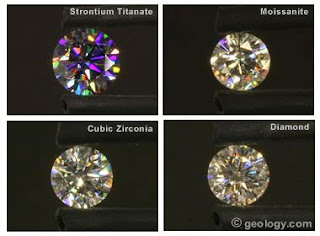
DIAMOND SIMULANTS A  diamond simulant  is a stone that looks similar to real  diamond  and shares some of its characteristics. Although  simulants  are used as  diamond  imitations, they have a different chemical structure from real  diamonds . Some  simulants  occur naturally, while others are created artificially. you can see the different simulants comparing the diamond in the image below  While the appearance of diamond simulants is similar to that of natural diamonds, they are not diamonds. Common diamond simulants include glass and cubic zirconia (CZ), both of which are completely unrelated to diamond at the atomic level. Simulants are, of course, less expensive than the real thing. They allow consumers to enjoy the flash and dazzle of diamond-like jewelry and to inexpensively complement the latest fashion trend. But no matter how convincing the illusion, all diamond simulants have optical and physical ch...

DIAMOND FLUORESCENCE

Image
DIAMOND FLUORESCENCE Diamond’s Reaction to Long Wave UV Rays A very interesting topic about diamond fluorescence that how diamond get energised when they are exposed to the long wave UV rays and their electrons get highly charged when diamonds came across the light that after UV light has been switched off they still emit blue color. Fluorescence is the visible light some diamonds emit when they are exposed to invisible ultraviolet (UV) rays. On a GIA diamond grading report, fluorescence refers to the strength, or intensity, of the diamond’s reaction to long-wave UV, which is an essential component of daylight. The light emitted lasts as long as the diamond is exposed to the ultraviolet source. Approximately 25% to 35% of the diamonds submitted to GIA over the past decade, exhibit some degree of fluorescence. However, only 10% of those show strengths of fluorescence that may impact appearance (i.e., strengths noted on laboratory reports as medium, strong or very ...

CARING FOR YOUR DIAMOND

Image
CARING FOR YOUR DIAMOND As we know that diamond is forever and its a stone which is known as symbol of love and is attached with people in emotional way. So in today's topic we will be discussing about caring of our diamonds and its jewelry. Diamonds are remarkably durable, resist scratching (except by other diamonds) and maintain their brilliance over time. But diamonds aren’t indestructible. They can be chipped by a sharp blow, become loose or lost in a weakened setting, or be damaged by contact with other diamonds or carbon elements near your surroundings . Wear diamond jewelry with care. Store it in padded boxes or soft bags separate from other jewelry. Clean your jewelry by wiping it with a lint-free cloth or with warm water, mild soap and a soft toothbrush, or by dipping it briefly in a commercial cleaning solution. Have your diamond jewelry periodically cleaned and its setting examined by a professional jeweler to maintain its beauty and integrity over time. ...

DIAMOND CUT

Image
A Diamond’s Cut Unleashes Its Light A diamond’s cut is crucial to the stone’s final beauty and value. And of all the diamond 4Cs, it is the most complex and technically difficult to analyze. To determine the cut grade of the standard round brilliant diamond – the shape that dominates the majority of diamond jewelry – GIA calculates the proportions of those facets that influence the diamond’s face-up appearance. These proportions allow GIA to evaluate how successfully a diamond interacts with light to create desirable visual effects such as: Brightness:  Internal and external white light reflected from a diamond Fire:  The scattering of white light into all the colors of the rainbow Scintillation:  The amount of sparkle a diamond produces, and the pattern of light and dark areas caused by reflections within the diamond

DIAMOND CLARITY

Image
DIAMOND CLARITY Natural diamonds are the result of carbon exposed to tremendous heat and pressure deep in the earth. This process can result in a variety of internal characteristics called 'inclusions' and external characteristics called 'blemishes.' Evaluating diamond clarity involves determining the number, size, relief, nature, and position of these characteristics, as well as how these affect the overall appearance of the stone. While no diamond is perfectly pure, the closer it comes, the higher its value. The GIA Clarity Scale has 6 categories, some of which are divided for a total of 11 specific grades. Many inclusions and blemishes are too tiny to be seen by anyone other than a trained diamond grader. To the naked eye, a VS1 and an SI2 diamond may look exactly the same, but these diamonds are quite different in terms of overall quality. This is why expert and accurate assessment of clarity is extremely important.

Diamond Color

Image
DIAMOND COLOR The color evaluation of most gem-quality diamonds is based on the absence of color. A chemically pure and structurally perfect diamond has no hue, like a drop of pure water, and consequently, a higher value. GIA's D-to-Z color-grading system measures the degree of colorlessness by comparing a stone under controlled lighting and precise viewing conditions to master stones of established color value. D-to-Z color-grading scale is the industry's most widely accepted grading system. The scale begins with the letter D, representing colorless, and continues, with increasing presence of color, to the letter Z. Many of these color distinctions are so subtle that they are invisible to the untrained eye; however, these distinctions make a very big difference in diamond quality and price.
Image
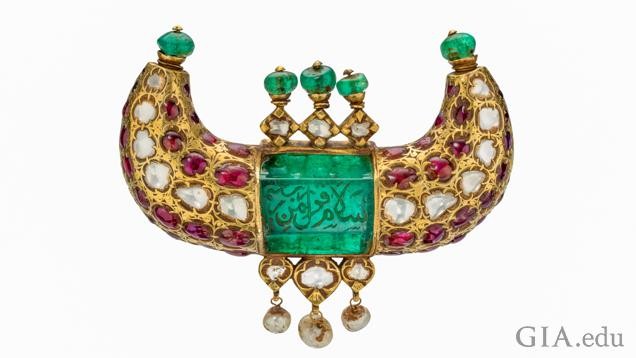
Introduction Large flawless diamonds from the Golconda region. Rich green emeralds from Colombia. Blood-red rubies from Burma. Only the most visually striking would do, set in the purest gold. For more than 5,000 years, jewelry has played an integral role in the history of India. Wars were fought and empires won and lost in pursuit of these riches. Yet, because of cultural practices, relatively little of the historic jewelry exists, the gems and precious metals repurposed by succeeding generations. The jewels in “Centuries of Opulance: Jewels of India,” which will be on display in Carlsbad until March 2018, are on loan from a private collection and showcase more than 300 years of adornment in India from the 17th to the 20th century, including several from the magnificent Mughal Era (1526–1857).   JOURNEY OF THE GEM Some of our most celebrated diamonds—including the infamous Hope and Koh-i-Noor—originated from India’s famed Golconda mining area. The Indian ari...

FACTS ABOUT GOLD

Gold is the only metal that is yellow or "golden". Other metals may develop a yellowish color, but only after they have oxidized or reacted with other chemicals. Nearly all of the gold on Earth came from meteorites that bombarded the planet over 200 million years after it formed. The element symbol for gold is Au. The symbol comes from the old Latin name for gold,  aurum , which means "shining dawn" or "glow of sunrise". The word "gold" comes from the Germanic languages, originating from the Proto-Germanic  gulþ  and Proto-Indo-European  ghel , meaning "yellow/green". The pure element has been known since ancient times. Gold is extremely ductile. A single ounce of gold (about 28 grams) can be stretched into a gold thread 5 miles (8 kilometers) long. Gold threads can even be used as embroidery thread. Malleability is a measure of how easily a material can be hammered into thin sheets. Gold is the most malleable element. A single o...

Dyed Yellow Beaded Freshwater Cultured Pearls Imitating South Sea Cultured Pearls

Image
In the spring of 2017, the Gübelin Gem Lab received a yellow pearl necklace for testing. The size and color of the specimens implied that they were South Sea cultured pearls. The high insurance value appeared to confirm this; however, there were some suspicious color patches that suggested the material had been dyed. Only a few months earlier, author LK visited the Hong Kong office of Grace Pearls, a large producer with a pearl farm and factory in China, to see their latest batch of freshwater cultured pearls. Grace Pearls developed a proprietary method to grow large freshwater pearls with bead, marketed as “Edison” pearls. These occur in all the known colors of traditional freshwater pearls, typically white, orange, pink, and purple. To  complement their color range, they also offer yellow and black treated pearls ranging from approximately 12 to 18 mm. The goods we saw at Grace Pearls had a wide range of qualities and prices. The lowest price for a strand of Edison pe...

What are Gemstones

What are Gemstones? Gemstones are basically rocks or minerals that are cut and polished to enhance their natural beauty. They are of various colors and shapes. Human kind has always been fascinated by gemstones and their beauty. Today, gemstones are used for astronomical as well as ornamental purposes. The beautiful cut, shine, and shapes attract a lot of people from all over the world. Why should you wear gemstones? There are many reasons why you should wear gemstones. Traditionally, they are believed to remove all the negative energies attached to any zodiac sign. There are different gemstones for all zodiac signs, so you can benefit a lot by wearing a gemstone of your zodiac sign. Opal, yellow sapphire, emerald,  ruby , red coral etc are the names of a few gemstones which are said to possess great powers. It is said that they transfer energies to people by body contact and cures many diseases. It is also said that they are bring good luck with them. So if you are havi...

HPHT Synthetic Diamond

Image
HPHT Synthetic Diamond Melee Without Si or Ni Defects Figure 1. These four near-colorless round brilliant melee were identified as HPHT synthetic diamonds lacking the typical Si- and Ni-related defects.  Near-colorless synthetic diamond melee grown using the high-pressure, high-temperature (HPHT) method have created significant concern in the industry, and various screening methods have been developed to take into account their most reliable distinguishing features. In general, the specimens described in previous Lab Notes (e.g. Summer 2015, pp. 183–184) were very small round faceted goods ranging between 0.005 and 0.01 ct. Recently GIA’s Bangkok laboratory received four loose near-colorless round brilliants for quality assurance service (figure 1). They weighed between 0.07 and 0.09 ct, slightly more than previously submitted melee. All were identified as type IIb HPHT-grown material using Fourier-transform infrared (FTIR) spectroscopy. Their most interesting featur...

The right way of buying gemstones

The treatment of gemstones is a complex science which has evolved over hundreds of years. The discovery of gems dates back to pre historic period and there are references in Indian Puranas and mythology about various precious Gems those were being amassed and formed part of the treasury of the Emperors. The award for any exemplary achievement either in warfare or in fine arts were rewarded by gifts of precious stones Gems have become affordable and formed the property of common man later, and Gem studded Jewellery is now part of the wardrobe of any modern woman. From time immemorial besides the use of gems for the ornamental purpose its hidden qualities to substitute vital elements of Human body was known. Though believed as the   Magical   properties of these stones they were being used for various ends from reaping riches to remedying the maladies. However it was not until the development of the modern science and chemistry the chemical properties of these natural st...

Treatment

Treatment WHAT does TREATMENT IN GEMSTONES mean? Treatment on gemstones refers to any human process (other than cutting and polishing) which improves the appearance (colour and clarity) or durability of a gem. Gems are treated in different ways like heating, surface diffusion, glass filling, beryllium diffusion, irradiation, fracture filling etc to alter their appearance. According to a survey done by GIA in 2005 95% ruby and sapphires (blue and yellow) available in the market were treated by heat. In our experience more than 99% rubies and sapphires (blue and yellow) available today are treated in some way or the other. Untreated gemstones are rarest of the rare gemstones as every piece is a unique creation of mother earth formed in thousands of year. Each gem is distinctive and irreplaceable. In fact it is a matter of fortune to find an untreated gemstone of your choice when you want to own one . Identifying whether a gemstone is treated or not needs good gemmological k...

Faq's of Gemstones

Q.1     What is the difference between Heated/unheated stones? Ans.      During Heating stones are put in furnaces in very high temperature and this alters the internal characteristics of a stone. Natural unheated stones internal characteristics are completely intact as made in earth’s crust for million of years & its colour and luster is completely natural whereas heated stones get their luster and colour artificially through furnaces. Q.2      For astrology purpose why should I wear an unheated, untreated gemstones? Ans.      When astrology evolved there were no treatments of precious stones known to mankind, the stones used were in there most natural form. Q.3      As a layman, how can I be sure that any given stone is natural or heated one? Ans.      It is practically not possible to judge a gemstone through naked eyes. So one should opt for certi...

Special Feature -" Customization"

" Earlier , the depth with which customers thought about their jewelry wasn't much. Now, their wants are very definite. Customization is about high end design, not high price, Customization has percolated down to smaller and lower priced pieces  " There are still people in today's world who want some unusual stuff people who visualize their own designs, aiming to reflect and enhance their own individual style and identity. That's a very niche segment that is where customization really happens  On contradicting the above statement (para) it is really not necessary since in today's era the gold and diamond prices are high there are also people who want a budgeted jewellery ranging between 25,000 to 1.25,000 so that jewellery can also be customized as per the needs of customer. Every one wants to fulfill their desires as everyone to create their own personality in social. we are seeing these days that design is the first impotence...